At Your Footdr, we are dedicated to providing exceptional podiatric care that helps you move with comfort and confidence.
Ingrown toenails occur when the edge of the nail presses into or penetrates the surrounding skin. This can cause pain, redness, swelling and, in some cases, infection or overgrown tissue around the nail.
Conservative treatment is often appropriate for mild or first-time ingrown toenails. However, when the problem is severe, repeatedly returns or does not respond to conservative care, a minor surgical procedure may provide a more permanent solution.
In most cases, only the problematic edge of the nail is removed rather than the entire toenail. A chemical called phenol may then be applied to the corresponding section of the nail matrix to reduce the likelihood of that edge growing back.
This procedure is commonly known as a partial nail avulsion with phenolisation.
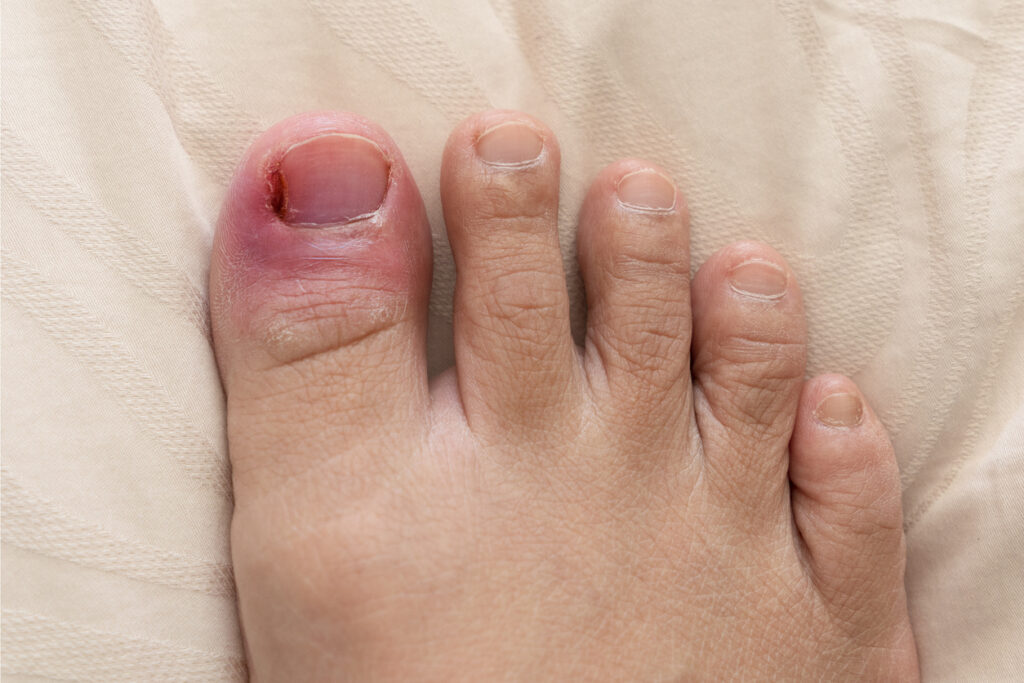
The procedure is performed in the clinic under local anaesthetic. We explain each stage beforehand so you know exactly what to expect.
We assess the affected nail, surrounding skin, severity of the ingrown toenail and your medical history. We’ll discuss whether conservative treatment or nail surgery is the most appropriate option for you.
Local anaesthetic is carefully administered to numb the affected toe. Once the anaesthetic has taken effect, the procedure itself should not be painful.
The problematic section of nail is carefully separated and removed. In most cases, only a narrow portion of the nail is removed, allowing the majority of the toenail to remain intact.
Where appropriate, phenol is applied to the nail matrix to help prevent the problematic nail edge from growing back. The toe is then cleaned and dressed, and you are given clear instructions for looking after it at home.
At Panania Podiatry & Health, ingrown toenail surgery is performed with a focus on precise treatment, patient comfort and reducing the likelihood of recurrence. We’ll explain your options clearly and make sure you understand the procedure and recovery before proceeding.
We aim to remove only the problematic portion of nail where appropriate, preserving the natural appearance and function of the remaining nail.
The toe is completely numbed before the procedure begins, allowing the treatment to be performed comfortably in the clinic.
Where appropriate, the affected section of nail matrix can be treated with phenol to significantly reduce the likelihood of the troublesome nail edge growing back.
You’ll receive clear wound-care instructions and appropriate follow-up to monitor healing and help you return to normal activity safely.
You’ll leave the clinic with the toe dressed. We’ll explain when to change the dressing and how to care for the area while it heals.
A roomy shoe or open-toed footwear can help avoid unnecessary pressure on the toe during the early stages of healing.
Some drainage and mild tenderness can occur while the area heals. Following your dressing and aftercare instructions helps support uncomplicated healing.
Find clear answers to common questions about our treatments, care process, and what to expect, helping you feel confident and informed every step of the way.
Ingrown toenail surgery is a minor procedure used to treat persistent or recurring ingrown toenails. Usually, only the problematic edge of the nail is removed while the rest of the nail remains intact.
The procedure is performed under local anaesthetic. You may briefly feel the anaesthetic injection, but once the toe is numb, you should not feel pain during the procedure.
Usually, no. Most ingrown toenails can be treated by removing only the narrow section of nail causing the problem. Complete nail removal is generally reserved for specific circumstances.
Our team can help with general foot care, diabetic foot checks, sports injuries, paediatric concerns, orthotics and lower-limb assessments.
Take the first step toward better foot health, improved comfort and confident movement.